
When Quitting Is No Longer an Option: The Hidden Strength of Having No Way Back
There are certain moments in life when something changes inside a person. Maybe the money is running low, a career has fallen apart, a business is struggling, or a goal that once felt exciting has turned into months of frustration and uncertainty. From the outside, it can look like exactly the moment when someone should finally admit defeat. Yet strangely, those are sometimes the moments when people discover a level of determination they never knew they possessed.
The excuses begin to lose their power. Things that once felt overwhelming become problems that simply have to be solved, and the question changes from “Can I really do this?” to “What do I need to do next?” Someone who has procrastinated for months suddenly becomes resourceful. Someone who always thought they lacked discipline begins working with extraordinary focus because the outcome now matters enough that walking away no longer feels acceptable.
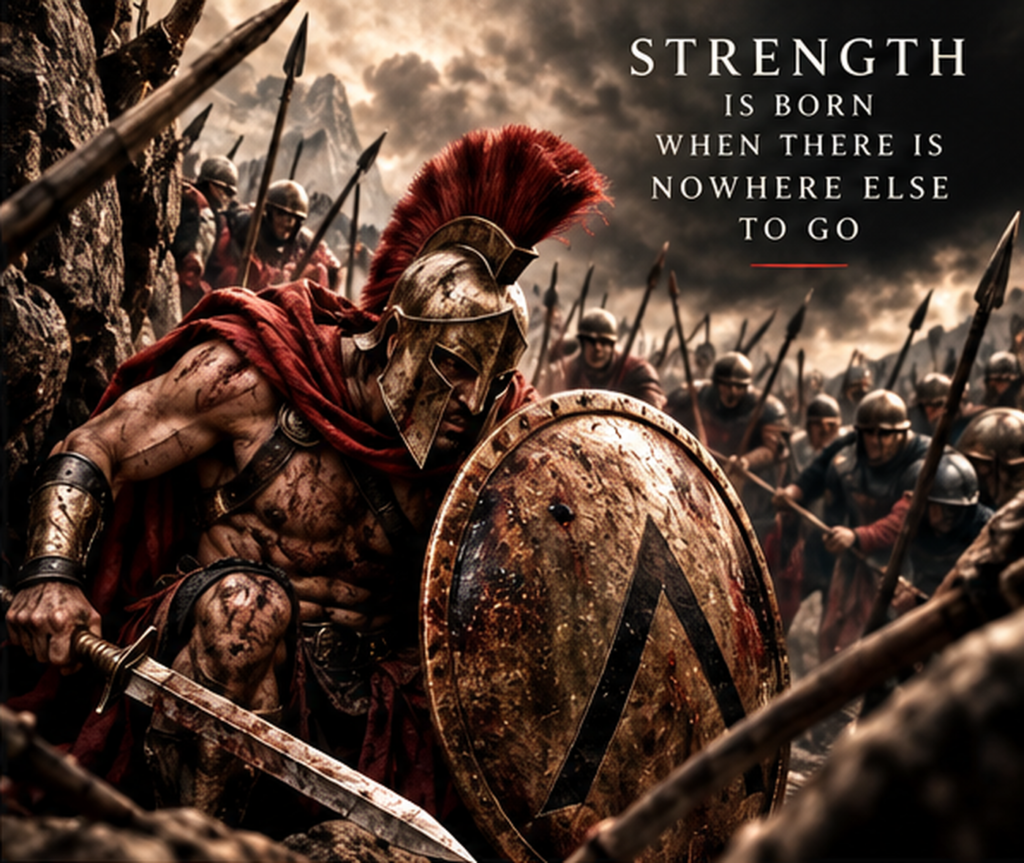
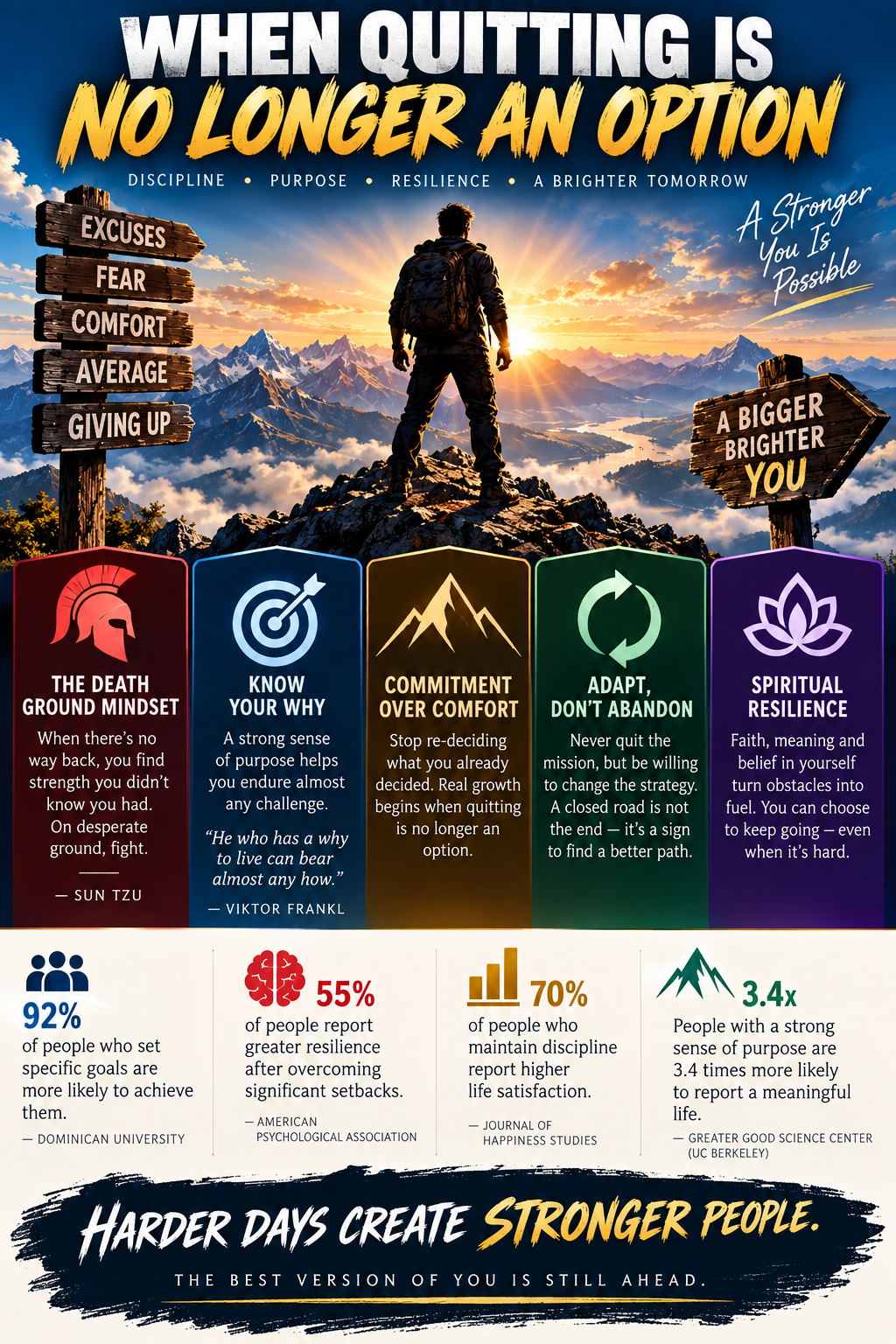
More than two thousand years ago, the Chinese military strategist Sun Tzu recognized something similar in The Art of War. While describing different kinds of battlefield terrain, he wrote about what is often translated as desperate ground—a position in which soldiers have no easy route of escape and survival depends upon fighting their way forward. His instruction was simple: “On desperate ground, fight.”
Sun Tzu was talking about warfare, not careers, businesses, health, money, or personal development. But underneath the military strategy is a surprisingly accurate observation about human nature. When retreat stops feeling like an option, people often reach deeper into themselves. They become more creative, more determined, and sometimes far more capable than they believed they were.
The question is whether we really need to wait until life backs us into a corner before discovering that strength.
The Strange Power of Death Ground
Imagine two people trying to climb the same difficult mountain trail. One knows that if the climb becomes too exhausting, someone will come pick them up and drive them back down. The other knows that reaching the other side is the only way home. They may have exactly the same physical strength, fitness, intelligence, and equipment, but psychologically they are climbing two very different mountains.
The first person is constantly negotiating with discomfort. Every steep section creates another opportunity to ask whether continuing is really worth it, and every setback makes the exit route more attractive. The second person may still be tired, frightened, frustrated, or sore, but they are no longer spending mental energy deciding whether to continue. The decision has already been made, so their attention shifts toward finding the safest path forward.
That small change—from “Should I continue?” to “How do I continue?”—can transform the way a person responds to difficulty. When quitting remains readily available, part of our mind keeps considering it. We imagine easier alternatives, wonder whether we chose the wrong goal, and reinterpret temporary setbacks as evidence that perhaps the whole thing was a mistake.
But once the larger decision has been settled, obstacles become different. They are no longer verdicts on whether we should keep going. They become problems waiting for solutions.
That is the deeper meaning behind death ground. It does not magically make a weak person strong. It often forces a person to finally use strength that was already there.
You Might Have No Idea What You’re Actually Capable Of
Most people probably do not have an accurate understanding of their own limits, and that may be one of the most encouraging truths about being human. Unless life has already required every ounce of your creativity, patience, discipline, courage, intelligence, and endurance at the same time, how could you possibly know where your real limit lies? We usually judge our future abilities by looking at what we have already done, even though what we have already done happened under completely different circumstances.
Necessity can change people dramatically. Someone who insists they could never work that hard may discover incredible stamina when their family depends upon their income. Someone who has always considered themselves terrible at studying can suddenly absorb enormous amounts of information when passing an exam means finally entering the career they want. A person who has procrastinated for years can become surprisingly disciplined after realizing that continuing their old habits will cost them something they deeply value.
Parents understand this instinctively. People routinely endure exhaustion, financial pressure, fear, inconvenience, and sacrifice for their children that they might never tolerate purely for themselves. The extra ability did not suddenly appear from nowhere; the reason to access it became powerful enough.
Difficult seasons sometimes reveal parts of us that comfortable seasons never had any reason to uncover. Pressure has a way of stripping away the theoretical questions and showing us what really matters. It can reveal that we were stronger, smarter, more resilient, and more resourceful than the version of ourselves we had become accustomed to seeing.
That does not mean you should intentionally destroy your safety net just to become motivated. Quitting your job with no plan, spending your last dollar on a business idea, or deliberately creating a crisis is not courage; sometimes it is simply poor judgment. The real goal is much more useful: learn how to access death-ground commitment without requiring death-ground circumstances.
Sometimes the Exit Door Becomes the Problem
There is absolutely nothing wrong with having options. Savings are good. Learning multiple skills is good. Having several ways to earn money is good. Knowing when a particular strategy has failed can save you years of wasted effort.
The problem begins when every difficult moment comes with an emotional escape hatch. Maybe you want to build a business, but you have quietly decided that if it does not work quickly, you will take that as evidence that entrepreneurship is not for you. Perhaps you want to improve your health, but only on days when you happen to feel motivated. You may want a new career, but every rejection pulls you back toward the familiar thought that staying where you are would be easier.
Those are understandable thoughts, but they reveal the difference between a preference and a commitment. A preference says, “I really hope this works.” A commitment says, “I am going to keep learning and adjusting until I find a workable path forward.”
Almost every meaningful goal eventually reaches an ugly middle period. The initial excitement is gone, but the reward has not arrived yet. Progress becomes harder to measure, people around you may not understand why you are still trying, and your confidence begins taking punches from reality.
That is where a surprising number of dreams quietly die. Not necessarily because the person lacked talent or potential, but because they had never completely decided that they were going to see the journey through.
Stop Re-Deciding What You Already Decided
One of the most exhausting things we can do is continually reopen the same decision. You decide to get healthier, and three difficult days later you begin deciding again. You decide to study for the certification, build the business, change careers, save money, write the book, or finish the project, but the moment enthusiasm disappears the entire decision goes back on trial.
Imagine trying to cross an ocean while repeatedly asking yourself whether you should turn the boat around. Even if you continue moving forward, you waste enormous amounts of mental energy debating a question you thought you had already answered. Eventually the internal argument becomes almost as exhausting as the journey itself.
There can be a tremendous amount of peace in deciding that certain questions are closed for a while. That does not mean blindly committing forever or refusing to acknowledge reality. It simply means giving yourself enough time and effort to find out what you are actually capable of before interpreting every difficult week as a reason to abandon the mission.
Maybe you do not know exactly how you will reach the destination. In fact, your original plan will probably change several times along the way. You may fail, embarrass yourself, lose time, waste effort, discover weaknesses, and occasionally wonder what on earth you were thinking.
But the deeper decision can remain intact: I am going forward.
When that becomes settled, failure starts looking less like a verdict and more like information.

Never Quit the Mission, but Be Willing to Change the Strategy
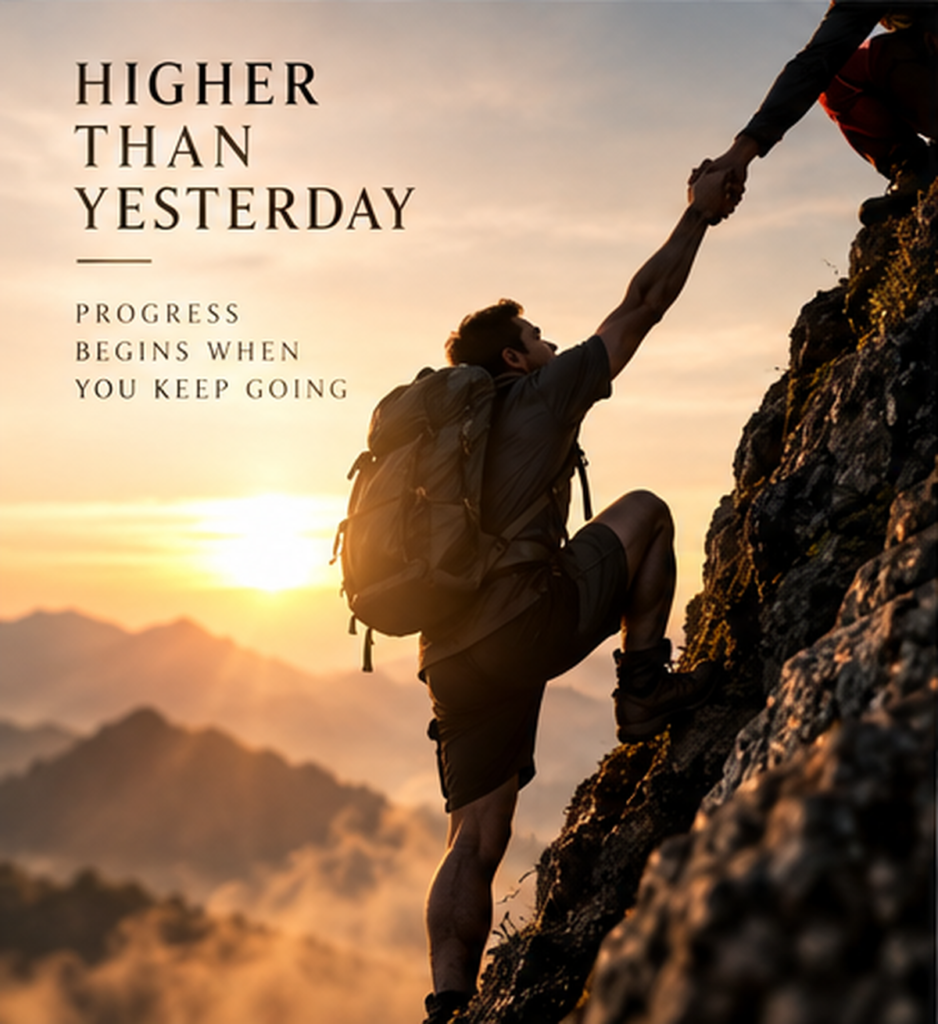
“Never give up” sounds inspiring, but taken literally it can be terrible advice. Sometimes the thing you are doing genuinely does not work. Businesses can have bad products, marketing campaigns can waste money, career plans can lead toward jobs you no longer want, and training methods can leave you injured rather than stronger.
Persistence is valuable, but stubbornness and persistence are not the same thing. Sun Tzu did not teach soldiers to blindly charge into every battle regardless of circumstances. The Art of War is full of lessons about positioning, timing, adaptation, preparation, knowing when to engage, and changing your approach when conditions change.
That distinction matters enormously in ordinary life. If your first business idea fails, you do not necessarily need to abandon entrepreneurship; you may need a better offer. If one employer rejects you, you do not have to abandon the career; perhaps your skills, resume, credentials, or approach need improvement. If one method of getting healthy has repeatedly failed you, the answer may be to change the method rather than surrender the goal.
If the road is blocked, loyalty to your destination does not require loyalty to that particular road.
Some of the strongest people are not the people who refuse to change direction. They are the ones who become extremely stubborn about why they are moving while remaining flexible about how they get there.
A Strong Enough Why Changes the Meaning of Hardship
There is another idea that fits remarkably well beside Sun Tzu’s desperate ground. Friedrich Nietzsche famously wrote an idea commonly translated as, “He who has a why to live can bear almost any how.” Psychiatrist Viktor Frankl later drew heavily upon that thought in Man’s Search for Meaning, his extraordinary exploration of suffering, purpose, and the human need to find meaning even in terrible circumstances.
There is something deeply true about it. Pain without meaning simply feels like pain. Hard work without meaning feels like punishment, and sacrifice without a reason feels like deprivation. But connect the exact same difficulty to something a person deeply values, and their relationship with that difficulty begins to change.
A father working exhausting hours because he is trying to create stability for his children experiences those hours differently from someone who feels they are simply wasting their life. Someone studying late at night because they can clearly picture the career they are building experiences fatigue differently. A person rebuilding after a devastating failure can withstand an enormous amount of frustration if they believe the struggle is carrying them toward something meaningful.
The struggle has somewhere to go.
Purpose does not magically remove suffering. Sometimes life hurts no matter how meaningful the destination may be. What purpose can do is prevent that suffering from feeling completely wasted.
Spiritual Resilience Starts With Knowing Why You Are Still Standing
This is where the idea moves beyond productivity and becomes something much deeper. There is a kind of spiritual resilience that appears when someone believes their life is connected to something meaningful. For one person, that strength may come from faith in God. For another, it may come from responsibility toward their children, a promise they made to themselves years ago, a calling, a dream, or simply the belief that they were not given this life to spend it permanently afraid.
The language may be different, but the effect can be remarkably similar. When someone has a powerful reason to continue, they become difficult to completely defeat. Life may exhaust them, humble them, frighten them, knock them down, or force them to rewrite the plan repeatedly, but underneath all of that something remains that says, I still have a reason to get back up.
That does not mean they never doubt themselves. In fact, real faith often exists precisely because doubt exists alongside it. It is easy to believe in yourself after you have already succeeded; the difficult kind of belief happens before the proof has arrived.
Sometimes faith is not confidence that everything will work out exactly the way you imagined. Sometimes it is simply taking another step while admitting that you have no idea what happens after it.
That may be enough.
Eventually You Have to Believe Before the Evidence Exists
One of the hardest parts of pursuing anything meaningful is that external proof usually comes late. You often have to practice long before anyone believes you are talented, build before anyone wants to buy, study before you feel knowledgeable, save before the account balance looks impressive, and change your habits long before the results are obvious.
For a while, your future may exist almost entirely inside your imagination. You can picture a person you have not fully become yet and a life that does not exist yet, while almost everything around you still resembles the life you are trying to leave behind. That period can be lonely because reality keeps showing you where you currently are while your mind keeps showing you where you are trying to go.
This is where believing in yourself actually matters. Not the shallow kind of confidence that says, “I am definitely going to succeed because I deserve it.” Nobody receives that guarantee.
A much stronger belief sounds like this: I trust myself to keep learning. I trust myself to adapt. I trust myself to survive setbacks. I trust myself to become more capable than I am right now.
That kind of confidence is much harder for failure to destroy because it does not depend upon everything going according to plan.
Pressure Can Reveal Strength, but Living Under Constant Pressure Is Not Strength
There is an important warning here because motivational ideas can become unhealthy when pushed too far. Pressure is not automatically beneficial. Human beings need sleep, recovery, relationships, quiet, laughter, and periods when they are not fighting anything.
Chronic stress can destroy judgment, creativity, physical health, and the very relationships that supposedly make all the effort worthwhile. Living every day as though disaster is one missed task away is not some higher form of discipline. Eventually it becomes self-destruction.
The lesson of death ground is not that you should psychologically live at war forever. The deeper lesson is about decisiveness. There will be seasons when you need to push hard, and there will be seasons when you need to recover so that you are capable of pushing again when it matters.
An athlete cannot sprint every mile of a marathon. A soldier cannot remain permanently in battle, and a machine operated at maximum output every second eventually breaks. Strength requires rhythm.
Your goal is not to become someone who never rests. It is to become someone who learns the difference between resting and retreating.
The Most Powerful Version Is Not “I Have No Choice”
Being genuinely backed into a corner is powerful because your mind concludes that there is no alternative. But there may actually be a stronger position available to us in ordinary life.
I have choices, and I am choosing this anyway.
You could quit. You could remain comfortable. You could stop applying for the jobs, stop studying, stop training, stop building, stop trying to become something different, and return to what is familiar. In most areas of life, nobody is physically forcing you forward.
That is precisely what makes voluntary commitment so powerful.
When you choose the difficult path despite having an escape route, your determination is no longer coming purely from fear. It starts coming from identity. You stop being someone desperately trying to escape one life and begin becoming someone deliberately building another.
That is a much healthier form of death ground.
You have not destroyed the bridge behind you.
You have simply stopped staring at it.
What Would You Do If Failure Wasn’t Permission to Quit?
Think about the goal that matters most to you right now. Maybe you want financial independence, a better career, a business of your own, improved health, a stronger relationship with your family, or simply the satisfaction of finally finishing something you have started and abandoned several times.
Now imagine that one failure did not give you permission to quit.
What would change?
Maybe you would study the mistake instead of hiding from it. Perhaps you would ask someone for help, learn an uncomfortable new skill, stop worrying so much about looking foolish, or try a tenth approach after the first nine failed. Maybe you would become more disciplined simply because you had finally decided that the alternative was no longer acceptable.
This thought experiment reveals something uncomfortable but empowering. Many of the limits we experience are not necessarily the outer limits of our ability.
Sometimes they are simply the places where we have historically given ourselves permission to stop.
If You Are Already in the Corner, Don’t Waste It
Maybe this article is reaching you during a season when death ground is not a metaphor.
Maybe money really is tight. Perhaps the career plan did fall apart, a relationship ended, you are rebuilding something you thought would already be established, or you are starting again at an age when you imagined you would have everything figured out. Maybe you are simply exhausted from putting effort into something while seeing very little evidence that the effort is paying off.
There is no need to pretend those situations are wonderful. Difficulty can hurt, and motivational language should never require people to be grateful for every painful thing that happens to them. But even when you would never have chosen the situation, you can still choose what you take from it.
Maybe this season is teaching you that you are more resourceful than you thought. Perhaps rejection does not destroy you as easily as you feared. Maybe you can learn faster, endure more uncertainty, or rebuild more effectively than the old version of you believed.
Sometimes the person we keep waiting to become does not appear before the struggle.
Sometimes the struggle is where that person gets built.
On Desperate Ground, Fight
There is a reason Sun Tzu’s observation remains recognizable thousands of years later. Human beings change when something truly matters. We stop wasting energy on things that do not serve the mission, become creative when the obvious solution disappears, and sometimes discover courage only after circumstances finally demand it.
The lesson is not to deliberately corner yourself. The lesson is to understand what the corner reveals.
There may be a level of determination inside you that you have never accessed simply because nothing has demanded all of it yet. There may be intelligence you have not fully used, discipline you have never consistently practiced, or courage you have never needed to call upon. You do not need to wait for catastrophe to discover those parts of yourself.
Find your reason. Protect the mission while remaining flexible about the route. Rest when you genuinely need recovery, learn when you fail, ask for help when you need it, and stop treating every difficult chapter as proof that the entire story has gone wrong.
You do not need absolute certainty about the future. You do not need every person around you to understand what you are trying to do, and you certainly do not need to feel fearless every morning.
You need something meaningful enough to keep moving toward while you figure the rest out.
Sometimes being backed into a corner reveals something extraordinary: there was more fight in you than you knew, more courage than your comfortable life ever demanded, and more potential than your previous circumstances had given you a reason to discover.
And perhaps the greatest realization is that you do not have to wait until life forces that person out of you.
You can choose the reason.
You can choose the direction.
You can decide that your future deserves your full participation.
Then, when the road gets difficult—and it eventually will—you already know what to do.
I needed this right now. It is true, when there is no easy way out people will fight to the death. I think too many people have a bad habit of waiting until the final hour to really dig in including myself. But maybe they are just wired in a way that they need that death ground to really giver. Either way this is definitely a season where I will dig in as hard as I can!