
Alpha Draconians and Andromedans: Inside the Strange Cosmic War of New Age Lore
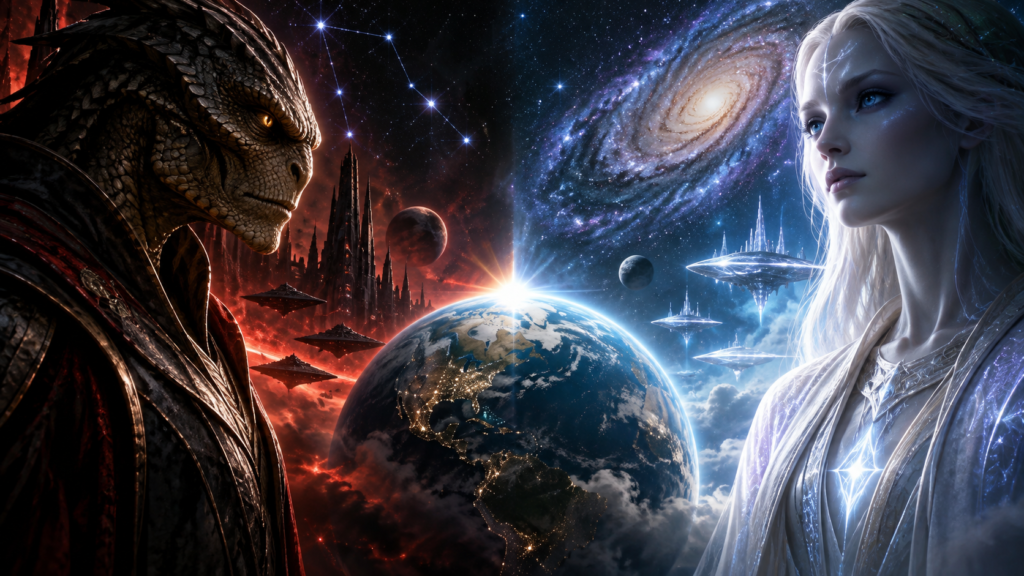
What if humanity’s oldest struggle is not simply between nations, religions, or competing ideologies, but part of something much larger? In one of the stranger corners of modern extraterrestrial and New Age lore, Earth is portrayed as a small but important world caught in an ancient conflict between radically different civilizations. On one side are the Alpha Draconians, usually described as powerful reptilian beings associated with hierarchy, conquest, and control. On the other are the Andromedans, portrayed as highly evolved beings concerned with free will, consciousness, and the natural development of intelligent life.
It sounds like science fiction, and from a scientific standpoint there is currently no verified evidence that either civilization exists. Yet the story has developed an unusually persistent following through contactee testimony, UFO culture, starseed spirituality, books, lectures, podcasts, and online communities. Its appeal is not difficult to understand: it combines real astronomy, ancient symbolism, spiritual questions, and a cosmic good-versus-control narrative into one enormous story.
What makes the Alpha Draconian and Andromedan mythology particularly interesting, however, is not simply the aliens. Beneath the spaceships and distant stars is a philosophical conflict humanity has wrestled with for thousands of years. Who should hold power? Does consciousness require freedom? Can a more advanced society interfere with a less advanced one for its own good? And what happens when intelligence advances faster than wisdom?
Those questions are considerably more interesting than simply asking whether reptilian aliens are hiding somewhere underground.
What Are Alpha Draconians and Andromedans?
The specific modern stories surrounding Alpha Draconians and Andromedans come primarily from contactee and New Age traditions, not conventional astronomy. Contactees are people who claim to have communicated directly or telepathically with extraterrestrial or non-human intelligences. Their accounts differ dramatically from one another, which makes it difficult to speak of a single agreed-upon “galactic history.”
One important figure in the modern Andromedan narrative is American contactee Alex Collier, who began publicly discussing his alleged encounters during the late twentieth century. Collier claimed that he had communicated with humanoid beings associated with Andromeda and had been given information about extraterrestrial civilizations, humanity’s origins, genetic intervention, and ancient conflicts throughout the galaxy.
In a recorded 1994 interview, Collier described something he called the Andromedan Council, which he compared loosely to a political coalition involving numerous extraterrestrial civilizations. According to Collier, its central goal was to allow civilizations to evolve without being manipulated by more powerful outside forces. He contrasted this philosophy with what he described as aggressive or “regressive” civilizations, particularly reptilian beings associated with Alpha Draconis. These remain Collier’s extraordinary claims rather than independently verified discoveries.
Before going deeper into the mythology, it helps to look at the real places in the sky that inspired its terminology. Andromeda is a genuine neighboring galaxy, while Alpha Draconis—Thuban—is a real star system in the constellation Draco.
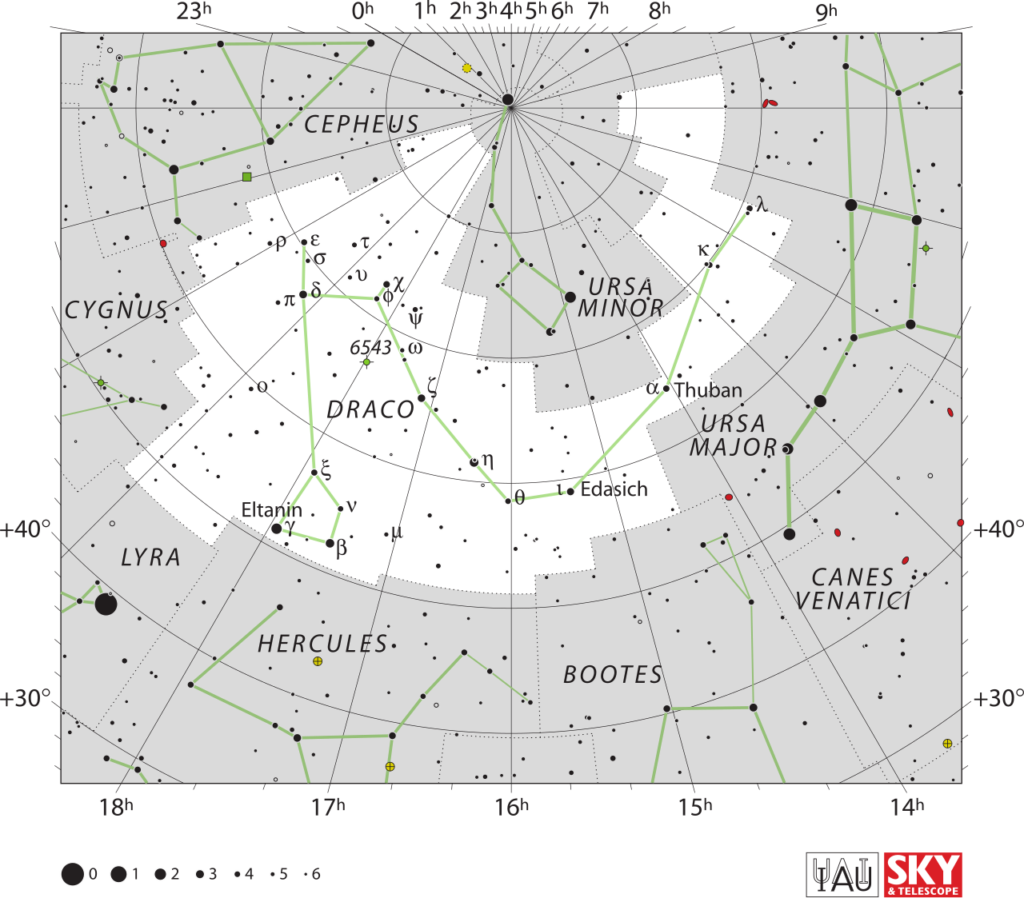
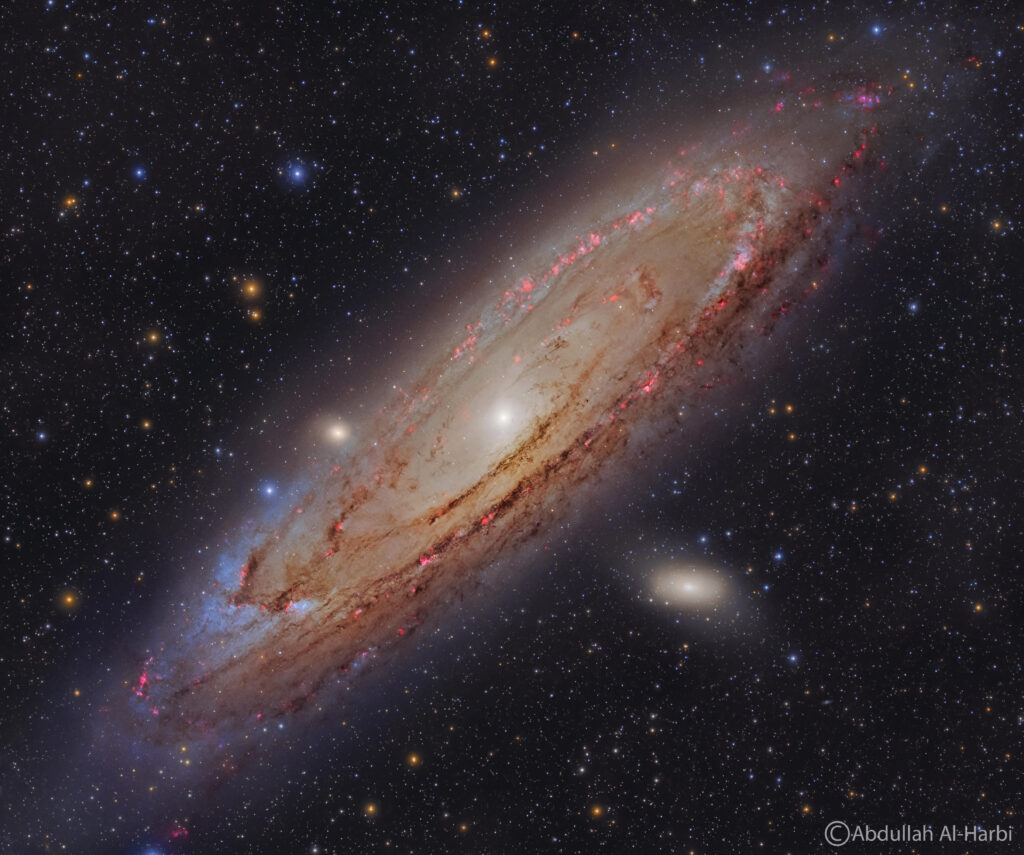
The astronomical reality is fascinating enough on its own. NASA places the Andromeda Galaxy, or M31, about 2.5 million light-years away, making it the nearest large spiral galaxy to our Milky Way. Alpha Draconis, better known as Thuban, is about 270 light-years away and is actually an eclipsing binary star system. Roughly 4,700 years ago, because of the slow precession of Earth’s rotational axis, Thuban occupied the role of the northern pole star that Polaris holds today.
Those facts do not prove anything about Andromedan visitors or reptilian civilizations. They do, however, give the mythology a fascinating anchor in the real universe.
The Alpha Draconians: An Ancient Reptilian Power?
Within the lore, Alpha Draconians are generally portrayed as an extraordinarily old reptilian civilization that developed advanced technology and interstellar travel long before humanity existed. In Collier’s accounts, they were formidable explorers and engineers who spread outward from the Alpha Draconis region, establishing influence over other worlds. He sometimes spoke admiringly of their technological achievements while strongly condemning what he characterized as their desire to control and dominate other civilizations.
This distinction matters because the Draconians are not normally presented as unintelligent monsters. The mythology actually becomes more unsettling because they are supposed to be extremely intelligent. Their alleged problem is not technological backwardness but a philosophy of power in which stronger beings are entitled to dominate weaker ones.
That idea eventually intersects with the broader reptilian extraterrestrial mythology that became famous through writers such as David Icke. Icke developed his own elaborate theory involving reptilian entities influencing human civilization and elite institutions. His narrative should not be treated as identical to Collier’s Andromedan cosmology, but the two occupy overlapping territory in modern UFO and conspiracy culture. Scholars studying Icke have described his work as part of a phenomenon sometimes called conspirituality, where New Age spirituality and conspiracy narratives merge into a shared worldview.
It is tempting to push the story backward and connect the Draconians with every serpent or dragon appearing in ancient mythology. Serpent beings certainly appear in traditions around the world, but similarity is not evidence of common extraterrestrial origin. Humans have lived alongside snakes throughout our evolutionary history, and their venom, unusual movement, shedding skin, underground habitats, and predatory behavior naturally made them powerful symbols of danger, rebirth, wisdom, and hidden knowledge.
The more defensible conclusion is that modern Draconian lore uses an extremely ancient human symbol—the serpent—and places it inside a technological, extraterrestrial framework.
The Andromedans: Guardians of Free Will?
If the Alpha Draconians represent hierarchy and domination, the Andromedans represent almost the philosophical opposite.
Collier described his alleged Andromedan contacts as members of an advanced civilization concerned with consciousness and the right of intelligent beings to develop without outside manipulation. In his account, the Andromedans did not want humanity worshipping them, nor did they intend to simply arrive and solve humanity’s problems. Instead, he claimed that they expected humans to take responsibility for Earth and participate in their own development.
That is an important detail because it separates the story from a typical alien-rescue fantasy. The message is not, “Remain passive until superior beings save you.” It is closer to: grow up, think independently, become responsible for yourselves, and stop surrendering your power so easily.
Whether or not anyone accepts Collier’s alleged extraterrestrial encounters literally, there is an obvious reason this message resonates. It turns the Andromedans into something similar to the enlightened teachers, angels, sages, or spiritual guides found throughout older religious traditions. The clothing has changed—spaceships and galaxies replace clouds and heavenly kingdoms—but the role remains recognizable.
Religious scholars have noticed this broader pattern in UFO spirituality. Research into contemporary Spiritualism has documented cases in which extraterrestrials effectively take on the role once occupied by spirit guides, with advanced technology and advanced spirituality imagined as two sides of the same development. In that framework, an extraterrestrial civilization becomes attractive precisely because it represents what humanity might someday become.
The Alleged Orion Wars and the Cosmic Conflict
This is where the story becomes enormous.
According to Collier, the Andromedan Council emerged sometime after an ancient conflict he called the Orion Wars. He claimed that the struggle involved humanoid and reptilian civilizations and lasted hundreds of thousands of years before eventually reaching something resembling an exhausted truce. Once again, there is no independently verified astronomical evidence for such a war; we are dealing with contactee testimony and modern extraterrestrial mythology.
Within the story, however, the Orion conflict establishes a much larger history in which Earth is merely one chapter. Numerous civilizations supposedly developed different philosophies toward expansion, genetic intervention, spirituality, technology, and free will. Alliances formed. Civilizations fought. Some supposedly adopted strict non-interference principles, while others regarded developing worlds as resources or strategic territory.
The mythology varies considerably depending on which author, channeler, or contactee is telling it, but several recurring ideas appear:
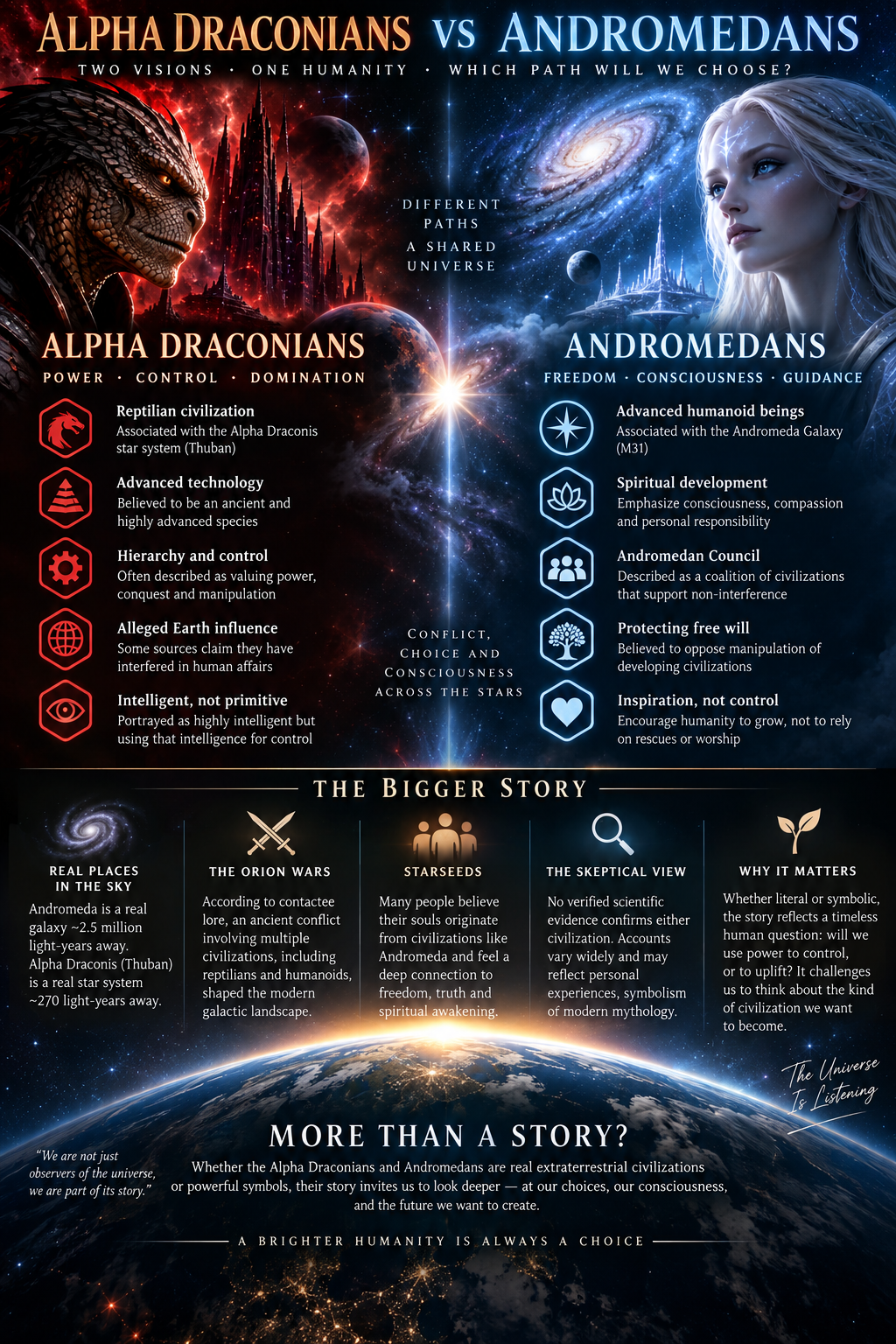
- Alpha Draconians tend to represent hierarchy, conquest, manipulation, and control.
- Andromedans tend to represent freedom, consciousness, responsibility, and non-interference.
- Other alleged civilizations, including Pleiadians, Sirians, Greys, Lyrans, and various Orion groups, occupy different positions depending on the source.
- Earth is portrayed as unusually important, either because of humanity’s genetic potential, consciousness, location, or approaching developmental transition.
- Human choice ultimately matters, because the battle is framed not merely as military conflict but as a question of which values humanity chooses to embody.
That final point changes the entire meaning of the story. Earth is not interesting because humans possess stronger weapons than these alleged civilizations. Quite the opposite. Humanity is interesting because we supposedly possess the ability to choose what kind of civilization we become.
Why Do People Believe These Stories?
The easiest response would be to dismiss the whole subject as ridiculous, but that doesn’t explain why the ideas survive.
Part of their appeal comes from astronomy itself. We now know that the universe contains an almost incomprehensible number of stars and planets. The Andromeda Galaxy alone stretches across an immense region of space, and modern observations have revealed vast stellar populations throughout it. The possibility that life exists somewhere beyond Earth is therefore not an absurd proposition; it is a legitimate scientific question.
The enormous leap occurs when the reasonable statement “extraterrestrial life may exist” becomes the specific statement “an Andromedan Council is opposing a reptilian civilization interfering with Earth.” Those claims require a completely different level of evidence.
But people do not form beliefs through scientific evidence alone. Personal experience matters enormously. Someone who believes they encountered a non-human intelligence during meditation, a dream, a near-death experience, or an unusual sighting may find that experience more emotionally convincing than any skeptical argument. Once someone begins searching for interpretations, communities built around contactees, starseeds, channeling, and cosmic spirituality can provide an entire framework for understanding what happened.
There is also something deeply appealing about believing that human life participates in a larger story. Ordinary existence can feel chaotic and meaningless. A cosmic narrative transforms personal struggles into part of an enormous process of awakening, evolution, or spiritual development.
Starseeds and the Expansion of the Andromedan Story
The mythology has continued evolving through the modern starseed movement.
Broadly speaking, starseeds are people who believe their soul or consciousness originated somewhere beyond Earth before incarnating here. Different communities identify alleged Pleiadian, Arcturian, Sirian, Lyran, Andromedan, and other origins. There is no scientific method capable of verifying such a spiritual identity, but starseed communities have become visible enough that researchers now study them as contemporary religious and spiritual phenomena.
In 2026, Religion News Service reported on thousands of attendees gathering at Los Angeles’ Conscious Life Expo, where starseed beliefs, extraterrestrial contact, energy practices, alternative spirituality, and conspiracy narratives increasingly overlap. The movement is notably decentralized; there is no single scripture or central authority determining what every starseed must believe. Instead, information spreads through influencers, channelers, workshops, videos, personal experiences, and online communities.
Andromedan starseed descriptions commonly emphasize independence, discomfort with rigid authority, compassion, freedom, spiritual development, and a sense of not fully belonging on Earth. Whether these descriptions indicate extraterrestrial origins or simply provide people with a meaningful language for personality and alienation is an open question of interpretation.
There is something psychologically powerful about replacing “I never fit in” with “perhaps I came here for a reason.”
What Evidence Do Supporters Point To?
Supporters do not generally claim that scientists have captured an Alpha Draconian or recovered an Andromedan spacecraft available for public examination. Instead, the case tends to be cumulative and experiential. Contactee testimony, channeling, UFO sightings, ancient mythology, unusual dreams, synchronicities, alleged past-life memories, and recurring descriptions from different spiritual sources are treated as pieces of one larger puzzle.
That type of evidence creates a serious investigative problem. A person can report an experience sincerely while still being mistaken about its cause. Similar accounts can arise because people encountered the same unknown phenomenon, but they can also arise because people absorb the same stories, symbolism, expectations, films, books, and internet culture.
Ancient mythology presents the same difficulty. Finding serpent figures in several unrelated cultures is certainly interesting, but it does not demonstrate that those cultures encountered the same reptilian extraterrestrial species. Human societies independently developed similar symbols in many areas because humans everywhere deal with similar fears, animals, natural phenomena, social structures, birth, death, dreams, and questions about existence.
None of this proves every extraordinary experience is meaningless. It simply means an unexplained experience remains unexplained until stronger evidence identifies its cause.
The Skeptical Problem: Where Is the Physical Evidence?
This is the greatest weakness in the literal Draconian-Andromedan theory.
If technologically advanced extraterrestrial civilizations had interacted extensively with Earth for thousands or even millions of years, we might reasonably expect physical traces. Those could include unmistakably non-human manufactured objects, biological material, independently repeatable communications, astronomical technological signatures, or evidence that multiple laboratories could examine without relying upon one person’s testimony.
No publicly verified evidence has established the existence of the specific civilizations described in this mythology.
There is another problem: different sources frequently contradict one another. One channeler describes a civilization as benevolent while another calls it dangerous. Timelines change. Galactic alliances change. Descriptions of alien biology change. Different supposed communications produce different histories of Earth.
Claims involving hidden dimensions, telepathy, secret government suppression, inaccessible underground bases, or spiritual frequencies are especially difficult to test because almost any lack of evidence can be explained inside the belief system itself. If evidence appears, it confirms the theory; if evidence doesn’t appear, secrecy supposedly confirms the theory too. A hypothesis that cannot realistically be proven wrong becomes extremely difficult to investigate scientifically.
That does not make every individual who explores these ideas dishonest or foolish. It simply means the evidence should be judged separately from how compelling the story feels.
The Deeper Symbolism: Control Versus Freedom
There is another way to approach Alpha Draconians and Andromedans that does not require deciding whether either civilization physically exists.
Strip away the spacecraft, star systems, underground bases, and galactic councils for a moment. What remains?
The Draconian archetype represents domination. Strength determines authority. Fear is useful. Hierarchy becomes rigid. Individuals become resources serving a larger system, and technology increases the ability of those at the top to control everyone beneath them.
The Andromedan archetype represents a different philosophy. Consciousness develops through freedom. Individuals must be allowed to choose, fail, learn, and mature. Advanced knowledge creates responsibility rather than entitlement, and genuine evolution cannot simply be imposed by a superior authority.
Suddenly the story doesn’t feel quite so alien.
Human civilization has debated these exact ideas throughout recorded history. Empires and rebels, dictators and reformers, centralized authority and individual liberty, religious obedience and personal revelation—all reflect versions of the same tension. The Alpha Draconian-Andromedan mythology takes an ancient human struggle and projects it onto the stars.
Religious scholar Christopher Partridge has written about the development of benevolent and malevolent extraterrestrial figures in UFO spirituality, including the transformation of aliens into beings that function somewhat like angels and demons within modern technological mythology. From that perspective, extraterrestrial stories do not necessarily replace older religious narratives. They can reinvent them for an age shaped by rockets, galaxies, artificial intelligence, and space exploration.
Why These Stories Matter Today
The question is no longer simply whether somebody believes in aliens.
Modern New Age culture increasingly blends meditation, personal transformation, alternative healing, extraterrestrial contact, conspiracy narratives, channeling, ancient mysteries, psychology, and technological language. Academic researchers have even adopted terms such as conspirituality to study places where spiritual ideas and conspiracy thinking overlap.
That creates both opportunity and danger. There is nothing inherently wrong with exploring unusual possibilities. Skepticism should not mean automatically rejecting every strange idea merely because it challenges conventional assumptions.
But good skepticism works in both directions.
A genuinely open mind should be willing to ask, “What if this is true?” It should also be willing to ask, “What would convince me that I am wrong?” Those two questions belong together.
That distinction becomes especially important when extraterrestrial mythology begins identifying real groups of human beings as secret enemies. Some reptilian conspiracy traditions have overlapped with older narratives involving sinister hidden elites, and scholars have examined how those ideas can merge with real-world conspiratorial scapegoating. Cosmic speculation becomes considerably less harmless when imaginary villains are used to justify hatred toward actual people.
Exploring a strange possibility should expand curiosity, not eliminate compassion.
Final Verdict: Are Alpha Draconians and Andromedans Real?
There is currently no reliable scientific evidence demonstrating that Alpha Draconians, the Andromedan Council, or the alleged galactic conflict between them exists as described by modern contactees.
Alpha Draconis is real. Andromeda is real. The universe is extraordinarily large. The possibility that intelligent extraterrestrial civilizations exist somewhere beyond Earth remains one of the most fascinating unanswered questions in science.
But those facts do not automatically validate a specific story about reptilian empires, cosmic councils, ancient Orion wars, genetic intervention, or extraterrestrial factions influencing humanity.
That may not be the end of the story, however.
Even if Alpha Draconians and Andromedans ultimately turn out to be entirely human creations, the mythology has become a remarkably effective mirror. It reflects our fears about authoritarianism, our hope that advanced intelligence might also become compassionate, our suspicion of institutions, our fascination with hidden knowledge, and our desire to believe humanity is capable of becoming something greater than it currently is.
Perhaps civilizations thousands or millions of years ahead of us really do exist somewhere among the stars. Perhaps some have solved problems we are only beginning to understand. Perhaps intelligence has evolved in forms so different from ours that we would struggle even to recognize it.
Or perhaps the cosmic war between Draconians and Andromedans is primarily a story humanity is telling itself.
Either way, the question at the center of the mythology remains surprisingly relevant: If humanity eventually gains extraordinary power, what kind of civilization will we choose to become?
That question does not require aliens to matter.
Further Reading
For the real astronomy behind our nearest major galactic neighbor, NASA provides an excellent overview of the Andromeda Galaxy. NASA — Andromeda Galaxy
For readers who want to examine the extraterrestrial claims at their source rather than through secondhand summaries, the archived 1994 Alex Collier interview lays out much of the Andromedan Council and Alpha Draconian narrative in Collier’s own words. Alex Collier — 1994 Interview